
The short answer: if your Wolf burner clicks but will not light, you are getting a spark but the gas is not catching. Nine times out of ten the fix is simple: dry a wet burner cap, seat it flat, and clear clogged ports with a straightened wire. If a burner clicks with no flame after that, or clicks constantly, or does not click at all, the spark electrode, igniter module, or gas supply needs a closer look. Most of that is technician work, and the diagnosis is symptom based rather than driven by a code.
What Is Happening at the Burner
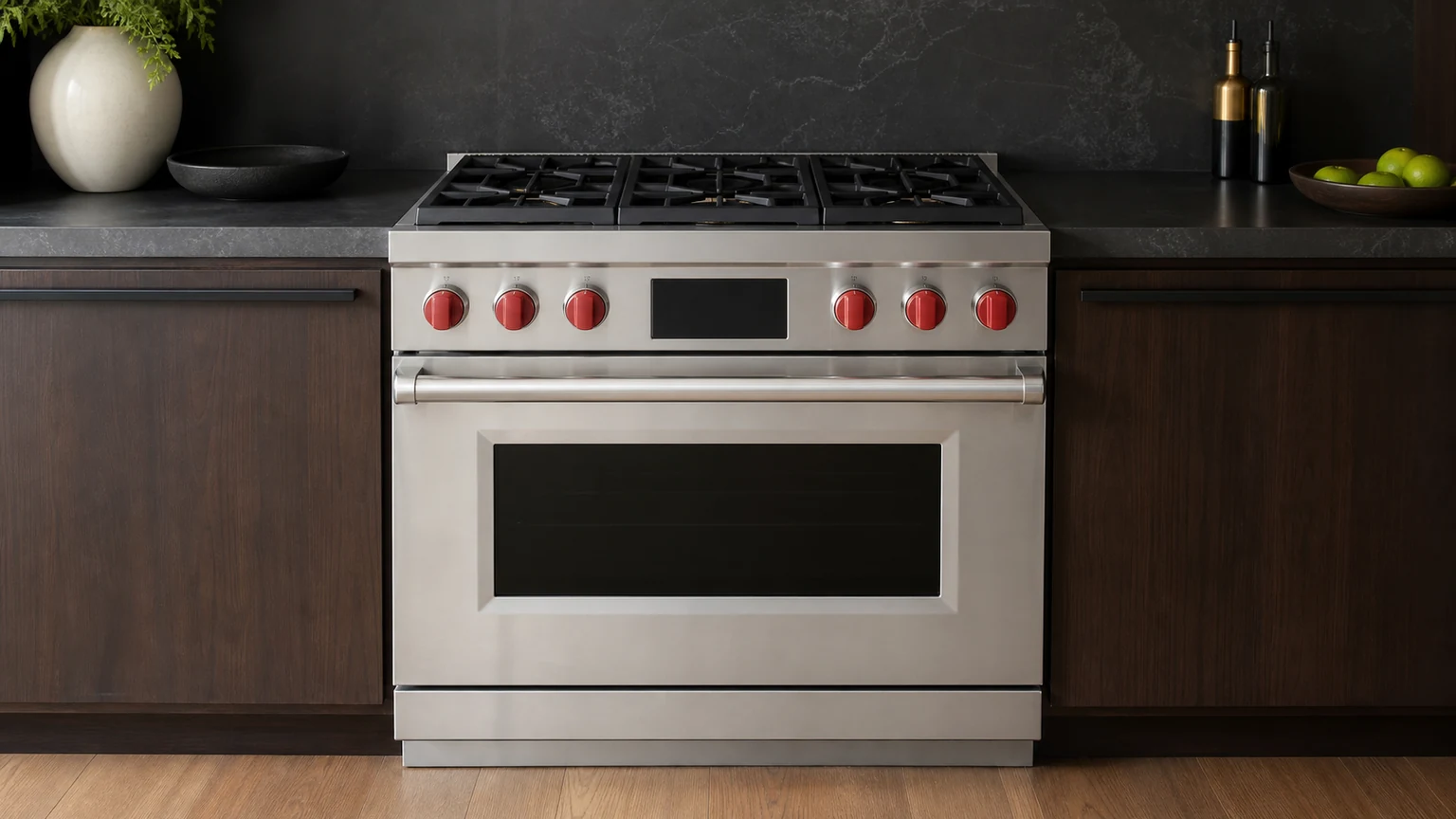
Wolf uses sealed, dual-stacked burners on its ranges and rangetops. When you turn the knob to light, a spark electrode next to the burner snaps repeatedly while gas flows out through the ports around the burner head. The spark has to jump to the gas at the right spot to light it. Anything that blocks the gas, wets the electrode, or moves the cap out of position breaks that hand-off, and you get the familiar click with no flame.
Because each burner has its own electrode but all of them share a single igniter module, the pattern tells you where to look. One burner failing points to that burner's ports, cap, or electrode. Every burner clicking at once points to the shared module or to moisture bridging the switches. Sorting one burner from all burners is the first move in every diagnosis.
Common Symptoms and What They Point To
| Symptom | Likely Cause | Owner or Tech |
|---|---|---|
| Clicks but no flame, one burner | Clogged ports, wet cap, or misaligned burner cap | Owner can clean first |
| Clicks but still no flame after cleaning | Cracked or dirty spark electrode not sparking to gas | Technician |
| No click at all on one burner | Broken electrode, switch, or wiring at that burner | Technician |
| All burners click at once, none light | Shared igniter module or moisture bridging switches | Owner dries first, then tech |
| Lights but flame is yellow or uneven | Clogged ports, dirty cap, or gas supply issue | Owner cleans, tech if it persists |
Note that Wolf gas burners do not use a numeric fault-code list the way some electronic appliances do, so an ignition complaint is diagnosed by symptom. The technician works from the click pattern, the spark, and the burner components rather than reading a code off a display. For a wider view of this problem across brands, see our page on a burner that will not ignite.
The Cap and Ports: Start Here
The most common no-light cause is a burner cap that is wet, off-center, or sitting over clogged ports. Boil-overs, a recent cleaning, or a cap dropped back on crooked all break the spark-to-gas hand-off. Lift the cap, dry it and the electrode with a towel, clear each port with a straightened paper clip or fine wire, and set the cap back flat so it seats fully. This resolves a large share of clicking burners and is safe owner maintenance. Keeping the caps clean and dry prevents the problem from coming back.
The Spark Electrode and Igniter Module
If the ports are clear and the cap is seated but the burner still clicks with no flame, the spark electrode is the next suspect. A cracked ceramic on the electrode leaks the spark to ground so it never reaches the gas, and a greasy electrode sparks weakly. When every burner clicks at once, or a burner clicks nonstop even in the off position, the shared spark igniter module or its wiring is usually at fault. Both the electrode and the module are technician repairs, since they involve the gas burner assembly and line-voltage ignition wiring.
Continuous clicking across all burners is very often moisture, not a failed part. After a spill, a heavy cleaning, or a humid day, water can bridge the ignition switches and make every burner spark at once. Turn all knobs off, wipe down the cooktop, lift and dry the caps and electrodes, and let it air out for an hour or two. If the clicking stops, nothing was broken. If it keeps clicking with no flame once everything is dry, note that it is all burners, not one, so the technician tests the shared module first.
What a Technician Checks
A proper Wolf ignition diagnosis follows the spark. The technician confirms gas is reaching the range, then watches the spark at the affected burner to see whether it is present, weak, or absent. Present-but-no-light points to ports, cap, or gas at that burner. Weak or misdirected spark points to a cracked or dirty electrode. No spark on one burner points to that electrode or switch, while no spark or constant spark on all burners points to the shared igniter module. Components are cleaned and tested before anything is replaced.
When to Call a Technician
Dry the cap, reseat it, and clear the ports first, then give an all-burner clicker time to dry out. Call for service when a burner still clicks with no flame after cleaning, when a burner does not click at all, when the clicking will not stop even with the knobs off, or when the flame stays yellow after the ports are clear. Electrode, switch, and igniter-module work involves the gas assembly and ignition wiring that need proper testing. Every repair we perform in Long Island City carries our Written warranty terms for eligible completed repairs. Diagnostic and travel fees, if applicable, are confirmed before the appointment and before repair approval.
Frequently Asked Questions
Why Does My Wolf Burner Click but Not Light?
One Wolf Burner Will Not Ignite but the Others Do. What Is Wrong?
Why Do All My Wolf Burners Click at Once and None Light?
Related
Wolf Repair
Ranges, rangetops, and cooktops serviced across Long Island City and New York City.
View brand → ProblemBurner Not Igniting
Why gas burners click without lighting and the checks that isolate it.
Read more → ServiceCooktop Repair
Igniter, electrode, and burner repair for luxury gas cooktops and rangetops.
View service →