
The short answer: if your Wolf oven runs but the cavity stays cold, the heat is either never being made or the control is shutting it off too soon. On a gas oven the usual culprit is a weak bake igniter that glows but no longer opens the safety gas valve. On an electric or dual-fuel electric oven it is a failed bake element. If the oven does heat but never reaches the set temperature, the temperature sensor has likely drifted. All three are technician repairs, and the diagnosis is symptom based rather than driven by a code.
What Is Happening Inside the Oven
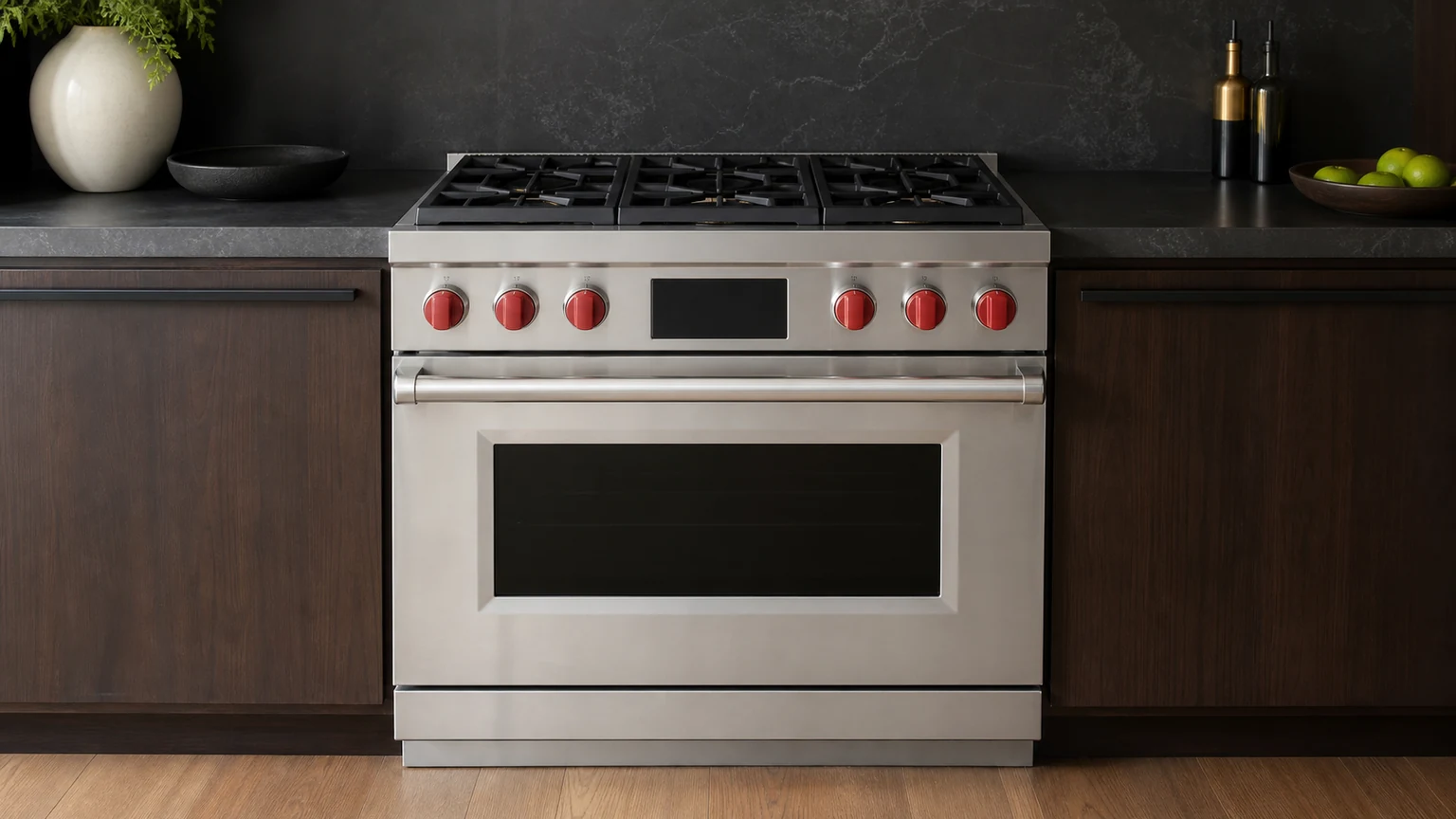
Wolf builds oven heat in one of two ways depending on the model. Gas ranges and gas oven cavities light a burner through a glow-bar igniter, which heats until it draws enough current to open the safety gas valve and admit gas. Electric wall ovens and the electric cavity on a dual-fuel range instead run current through a bake element that glows red. In both designs a temperature sensor, called an RTD probe, tells the control board how hot the cavity is so it can cycle heat on and off to hold your setting.
When any one of those parts weakens, the oven behaves in a recognizable way. A dead igniter or open element means no heat at all. A sensor reading wrong means the oven heats but shuts off early, so it runs cool or never finishes preheat. Sorting no heat from wrong heat is the first step in every diagnosis.
Common Symptoms and What They Point To
| Symptom | Likely Cause | Owner or Tech |
|---|---|---|
| No heat at all, gas oven | Bake igniter too weak to open the safety gas valve | Technician |
| No heat at all, electric or dual-fuel electric cavity | Bake element burned open, no continuity | Technician |
| Heats but never reaches set temp | Temperature sensor (RTD probe) drifted out of range | Technician |
| Igniter glows dim orange, oven never lights | Weak glow igniter drawing low current | Technician |
| Preheat never completes or times out | Sensor fault or control board relay not calling for heat | Technician |
Note that Wolf ovens do not use a broad public numeric fault-code list the way a Bosch dishwasher does. Some electronic E series and M series wall ovens can show a fault or error indication on the display, but for most no-heat complaints the diagnosis is symptom based, working from temperatures, current draw, and component testing rather than a code. For a wider view of this failure across brands, see our page on an oven that is not heating.
The Bake Igniter: Start Here on a Gas Oven
On a gas Wolf oven the glow-bar igniter is the most common failure. It has to heat up and draw enough amperage to trip the safety gas valve open. As it ages it still glows, sometimes a dim orange, but the current drops and the valve never opens, so no gas lights. A weak igniter that glows can fool an owner into thinking the igniter is fine, which is why a technician measures actual current draw rather than trusting the glow. When the reading is below spec, the igniter is replaced and the valve opens again.
The Bake Element and Temperature Sensor
On electric and dual-fuel electric cavities, a bake element that has burned through shows no continuity and produces no heat. It often looks blistered or visibly broken. The temperature sensor is a separate story: the RTD probe reads about 1080 ohms at room temperature, and when its resistance drifts, the control board reads the cavity wrong and cuts heat early. That is the oven that heats but runs cold. A technician tests the element for continuity and the probe against its resistance chart before replacing either one.
Before assuming a part failed, confirm the oven is not sitting in a delay-start or Sabbath mode, that a recent power interruption did not clear the clock and lock out heat, and that the correct bake mode is selected rather than a convection or timed cycle. These settings can mimic a no-heat fault. If the oven still will not heat once you have ruled them out, note whether you get no heat at all or heat that never reaches temperature, since that single detail tells the technician where to start.
What a Technician Checks
A proper Wolf oven no-heat diagnosis follows the heat path. On a gas oven the technician measures the bake igniter current draw to confirm whether it can open the safety gas valve, and tests the valve itself if the igniter is in spec. On an electric or dual-fuel cavity the bake element is checked for continuity. In every case the temperature sensor is measured against its resistance chart, and the control board and its bake relay are verified last, since a board is only condemned after the igniter, element, and sensor test good.
When to Call a Technician
Rule out the settings and a cleared clock first, then call for service when the oven produces no heat at all, when the igniter glows but never lights the burner, when an electric element stays dark, or when the oven heats but never reaches the temperature you set. Igniter, element, and sensor work involves gas or line-voltage components that need proper testing. Every repair we perform in Long Island City carries our Written warranty terms for eligible completed repairs. Diagnostic and travel fees, if applicable, are confirmed before the appointment and before repair approval.
Frequently Asked Questions
Why Is My Wolf Oven Not Heating Up at All?
My Wolf Oven Heats but Never Reaches the Set Temperature. Why?
Does a Wolf Oven Show an Error Code When It Will Not Heat?
Related
Wolf Repair
Ranges, rangetops, and wall ovens serviced across Long Island City and New York City.
View brand → ProblemOven Not Heating
Why ovens stop heating and the checks that isolate the cause.
Read more → ServiceWall Oven Repair
Igniter, element, sensor, and control repair for luxury wall ovens.
View service →