
We repair True Residential refrigeration in Long Island City, with appointment timing confirmed at booking. True built its name on commercial refrigeration, and its residential line carries that heavy-duty, forced-air engineering into the home in the form of refrigerator columns, wine columns, undercounter units, and beverage centers. That commercial pedigree means the units are built to be serviced and to run for years, and most faults trace to a replaceable part. Our service focus includes specialists who diagnose True by symptom, since the platform is largely symptom-based rather than driven by a numbered fault list. Diagnostic and travel fees, if applicable, are confirmed before the appointment and before repair approval.on genuine OEM parts.
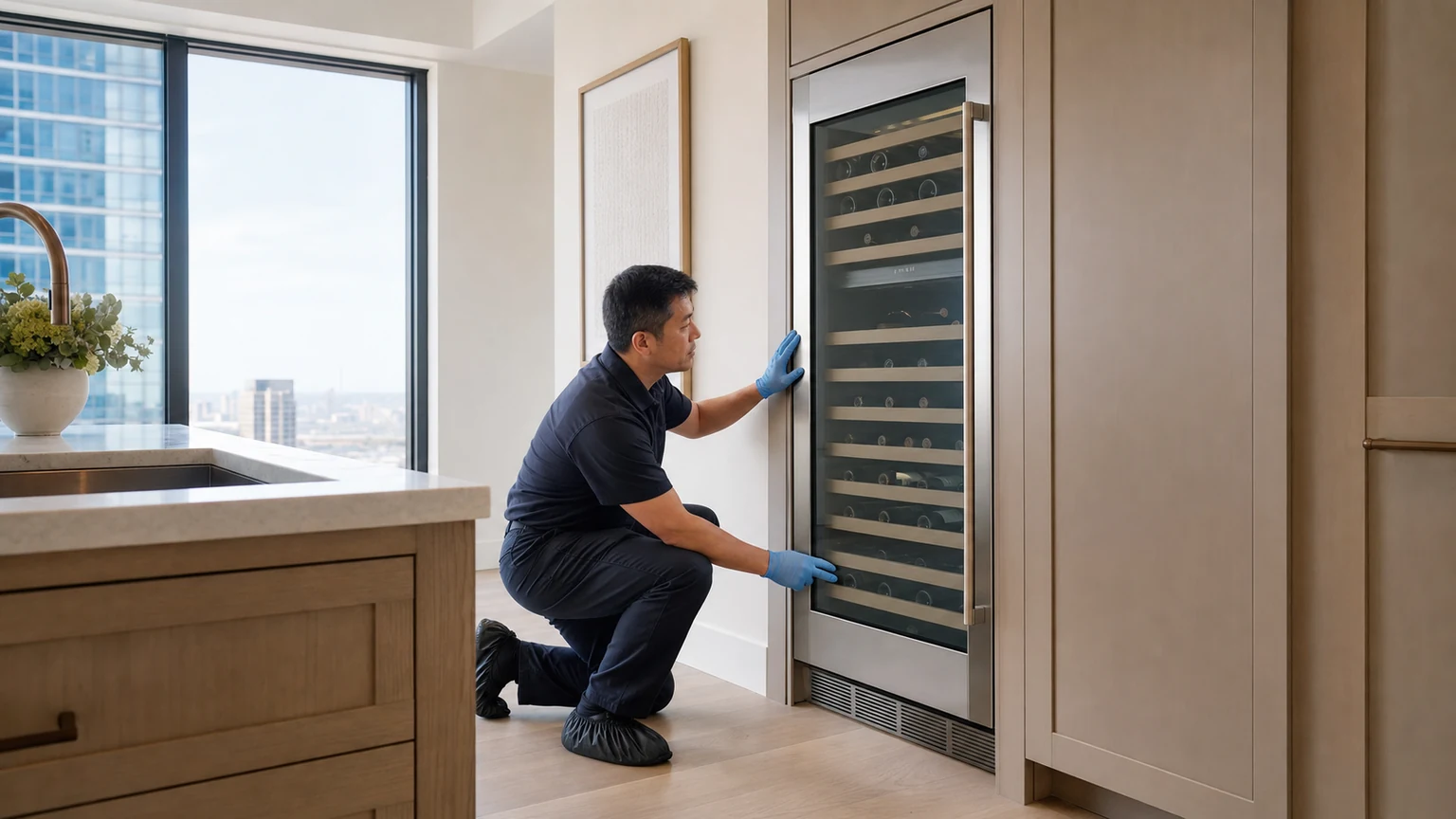
Models We Service
True Residential is organized mostly by width and function, in full-height columns and undercounter units. Give us the model and serial from the plate, usually inside the door frame, and we will identify the platform before we arrive.
Refrigerator & Freezer Columns
- 24-Inch, 30-inch, and 36-inch refrigerator columns with solid or glass doors.
- Full-height freezer columns paired alongside refrigerator columns.
- Panel-ready and stainless-front full-height refrigeration.
Wine Columns & Dual-Zone Units
- Full-height wine columns with single and dual temperature zones for reds and whites.
- Glass-door wine cabinets with UV-treated glass and adjustable shelving.
Undercounter & Specialty
- 15-Inch and 24-inch undercounter refrigerators and freezer drawers.
- Undercounter wine units, beverage centers, and dual-zone bar refrigeration.
- Undercounter clear-ice machines and combination refrigerator-ice units.
Whether your True is a full-height column or an undercounter unit, the common trouble points, the fans, the defrost system, the sensors, the sealed system, and the door seals, are shared across the line. An accurate model and serial is the fastest path to the correct part.
Error & Fault Codes
True Residential is largely symptom-based. The digital control displays the set and actual temperature and may show a general alert or a temperature alarm, but there is no long numbered fault chart to read. Diagnosis is done by symptom: we test the compressor, the evaporator and condenser fans, the defrost system, the sensors, and the sealed system. The table below lists the symptoms we see most often, the likely cause, and the typical fix.
| Symptom | Likely Cause | Typical Fix |
|---|---|---|
| Refrigerator running warm | Evaporator or condenser fan fault, dirty condenser, or a defrost failure frosting the coil | Test the fans and defrost system, clean the condenser, and restore proper airflow and cooling |
| Whole unit not cooling | Compressor start components, a sealed-system charge issue, or a main control fault | Measure the compressor circuit and system, then repair the confirmed component |
| Wine zone drifting off setpoint | Drifted temperature sensor, control fault, evaporator fan, or a door seal leaking warm air | Calibrate against a reference probe, test the sensor and fan, and replace the gasket or control as needed |
| Temperature alarm on the display | Door left ajar, a warm load, or an actual cooling fault the control has detected | Confirm the door and load, then diagnose the cooling system if the alarm persists |
| Frost or ice on the interior | Defrost heater, terminator, or drain fault, or a door seal admitting humid air | Test the defrost components, clear the drain, and replace the gasket if it is leaking |
| Water pooling or leaking | A blocked or frozen defrost drain, or a cracked water line on an ice-equipped unit | Clear and heat-trace the drain, and repair the water line |
| Noisy or constant running | A worn fan bearing, a fouled condenser, or a door seal that will not hold | Replace the fan, clean the condenser, and reseat or replace the gasket |
| Interior light or display dead | Failed LED, control board, or a power fault | Test the power and control, then replace the failed component |
Common True Residential Problems We Fix
These are the calls we handle most often on True Residential units in Long Island City. We diagnose first and replace parts only after we confirm the fault.
- Not cooling. Usually an evaporator or condenser fan, a defrost fault, or a dirty condenser, rarely a failed compressor.
- Wine column temperature drift. A drifted sensor, a control fault, or a door seal letting warm air in.
- Temperature alarm. A door ajar, a warm load, or a real cooling fault the control has flagged.
- Frost buildup. A defrost heater or terminator fault, or a leaking gasket.
- Water leaking. A frozen defrost drain or a cracked water line on an ice-equipped unit.
- Constant running. A fouled condenser, a weak fan, or a seal that will not hold temperature.
- Noisy operation. A worn evaporator or condenser fan bearing.
- Door not sealing. A gasket that has taken a set, replaced with the correct profile.
When a True wine column stops holding its setpoint, owners often fear a failed sealed system. In practice, drift on a wine unit usually traces to a temperature sensor that has wandered, a control that needs attention, an evaporator fan, or a door gasket admitting warm room air. Each of those is a serviceable part. We calibrate against a reference probe and test the sensor and fan before ever touching the sealed system, so your collection stays at the temperature it was set to hold.
Maintenance & Guides
Keep the condenser clean. True uses a commercial-style forced-air condenser that sheds a lot of heat, and in a built-in or undercounter install it collects dust and pet hair quickly. A clogged condenser makes the compressor run hotter and longer and warms the interior. Vacuuming the condenser on a regular schedule is the single best thing an owner can do. Our guide on the True Residential not cooling problem walks through what a warm unit usually means and which parts we check first.
Watch the wine zone temperature. A wine column is only doing its job if it holds the setpoint. If the actual temperature on the display starts to wander from the set value, note how far off it runs and for how long before you call; that detail helps us tell a sensor drift from a fan or seal issue. Our walkthrough on True Residential wine column temperature covers the common causes of drift and how we correct them.
Check the door seals. On a heavy True door, a gasket that has taken a set or torn will admit warm, humid room air, which shows up as frost inside, condensation on the glass, or a unit that runs constantly. Wiping the gaskets clean and watching for an even seal all the way around catches a small problem before it becomes a service call.